Floating, sinking and upright leaves are shaped by simple physical factors. The most reliable quality judgement still comes from aroma, taste and consistency.

A moving leaf is not automatically a sign of higher or lower quality
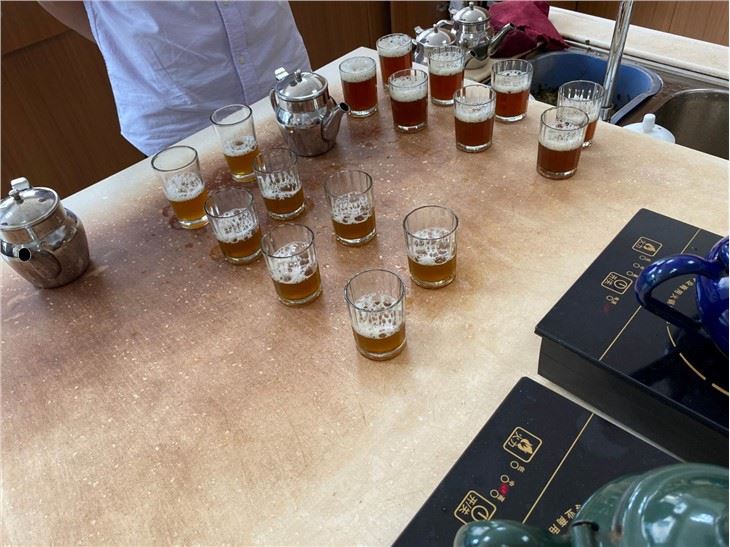
When green tea is placed in water, some leaves remain on the surface, some sink quickly and others slowly move between the top and bottom. This behaviour is interesting to watch, but it should not be used as a simple quality grade.
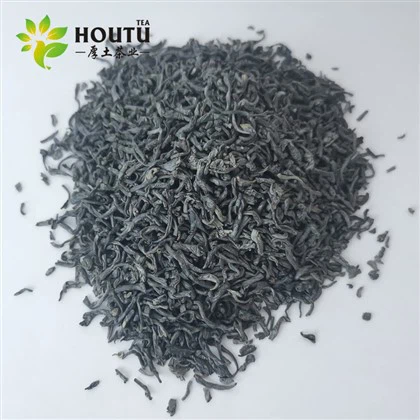
Tea leaves differ in shape, thickness, surface structure and the amount of air trapped between folds. Rolled pellets, curved Chunmee leaves and flatter leaves therefore do not enter the water in exactly the same way.
Why leaves may float at first
Dry tea can hold small pockets of air, especially when the leaf is rolled, twisted or folded. The leaf surface also does not become completely wet at the same speed in every tea. Research on tea-leaf wettability shows that leaf surfaces can differ in how readily water spreads across them.
As water enters the leaf and trapped air escapes, many leaves become heavier and begin to sink. Gentle stirring or pouring water directly over the leaves can speed up this change.

Why some leaves stand upright
Slim leaves and buds can briefly stand or move vertically when their weight and buoyancy are balanced. Water currents created during pouring also move the leaves. Once the cup becomes still and the leaves are fully wet, their position may change again.
| Observation | Common explanation | What the drinker should do |
|---|---|---|
| Leaves float | Trapped air or slower wetting. | Wait, gently stir or continue brewing. |
| Leaves sink quickly | The leaf wets quickly or has a compact, heavier shape. | Judge the cup, not the speed. |
| Leaves move up and down | Water circulation and changing buoyancy. | Enjoy the visual effect. |
| Some leaves never sink | Shape, surface or trapped air may remain. | Use a strainer if preferred. |
The better way to judge tea