Tieguanyin and the Iron Goddess: Two Legends Behind a Famous Tea

Jul 23, 2026

Leave a message

Sophia Xu
Sophia Xu
Sophia is an experienced tea taster at Shengzhou Houtu Tea Co., Ltd. She has a sharp palate and can accurately evaluate the taste and quality of various green teas, providing valuable opinions for the company's production.
TEA STORIES THROUGH TIME · ARTICLE 85
Tieguanyin and the Iron Goddess: Two Legends Behind a Famous Tea

Two different legends explain one famous name-and reveal how tea memory can belong to more than one community.

Rolled Tieguanyin oolong tea leaves
Tieguanyin is both a tea cultivar name and a famous Anxi oolong product name.
Image source: Wikimedia Commons – Tieguanyin tea
One legend begins with a dream of Guanyin. The other begins with a scholar, an unusual plant and an emperor.

The story

The official Anxi account records a "Wei version." Tea farmer Wei Yin was said to have dreamed of an unusual plant near a rock crevice, found it the next morning and cultivated it in an iron vessel. Because Guanyin appeared in the dream and the tea was linked with iron, the name Tieguanyin was proposed.

The "Wang version" tells of scholar Wang Shirang finding and cultivating an unusual tea tree. Tea made from it eventually reached the imperial court, where the Qianlong Emperor supposedly named it for its iron-like heaviness and Guanyin-like beauty.

What the sources tell us

The Anxi government presents both stories as legends, not as equally proven archival events.
Tieguanyin originated in Anxi and became central to the county's tea identity.
FAO recognises the Anxi Tieguanyin Tea Culture System as a Globally Important Agricultural Heritage System.
Two stories can coexist
Origin legends often express the memory of different villages, families or values. The existence of two versions is not a defect to be "solved"; it is part of the cultural history.

Why the story still matters

The Wei story emphasises devotion, discovery and patient cultivation. The Wang story emphasises scholarship, presentation and imperial recognition. Together, they explain why the product carries both sacred and commercial associations.

For buyers, the name still needs practical support: verified origin, cup quality and consistent supply.
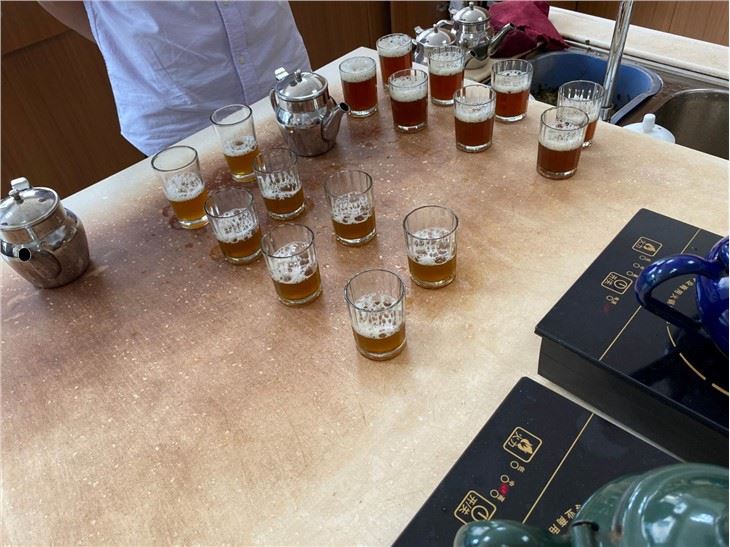
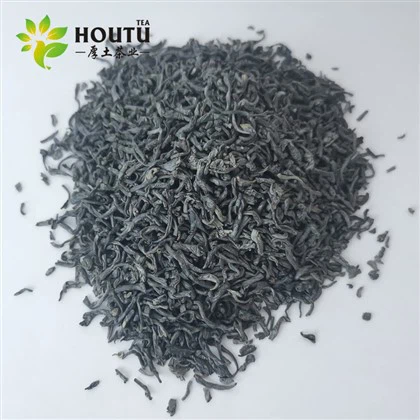
Tea image connected with the story
A famous name attracts attention, while tasting establishes whether the product suits the market.
Image source: HOUTU TEA public image library
Interested in a tea with a famous story and a clear product identity?
Contact Sophie to discuss tea style, flavour, packaging and market needs.
Email SophieWhatsApp Sophie
jessie@hoututea.com · +86 18888798057
Send Inquiry
Contact us if have any question

You can either contact us via phone, email or online form below. Our specialist will contact you back shortly.

Contact now!