Bodhidharma and the Eyelid Tea Legend: What the Story Means

Jul 23, 2026

Leave a message

Sophia Xu
Sophia Xu
Sophia is an experienced tea taster at Shengzhou Houtu Tea Co., Ltd. She has a sharp palate and can accurately evaluate the taste and quality of various green teas, providing valuable opinions for the company's production.
TEA STORIES THROUGH TIME · ARTICLE 86
Bodhidharma and the Eyelid Tea Legend: What the Story Means

A startling legend about sleep, meditation and the reason tea became associated with wakefulness.

Artistic representation of Bodhidharma
Bodhidharma is a semi-legendary Buddhist patriarch represented differently across East Asia.
Image source: Wikimedia Commons – Bodhidharma or Daruma
The story is impossible as biology-but powerful as a symbol of discipline and wakefulness.

The story

In a famous legend, Bodhidharma struggled to remain awake during prolonged meditation. In anger at falling asleep, he tore off his eyelids. Where they touched the earth, tea plants grew. The leaves then helped monks stay alert.

The story is told in several versions and is especially associated with later Zen tea narratives. It should not be used as evidence for the botanical origin of tea or the historical beginning of monastic tea drinking.

What the sources tell us

Bodhidharma is traditionally associated with the transmission of Chan or Zen Buddhism, but historians describe much of his biography as legendary or semi-legendary.
The eyelid story is explicitly presented as legend in educational material about Zen and tea.
Tea's caffeine genuinely supports alertness, which helps explain why the legend felt meaningful to later audiences.
Symbolic truth is not historical proof
The legend communicates an idea: discipline requires wakefulness, and tea can support attention. That cultural meaning does not make the physical event factual.

Why the story still matters

Myths often survive because they turn an invisible quality into a vivid image. Caffeine cannot be seen, but a plant born from eyelids makes wakefulness unforgettable.

A credible tea website can tell the story while clearly labelling it, allowing readers to enjoy the imagination without being misled.

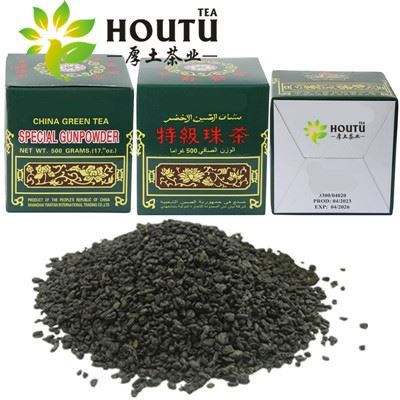
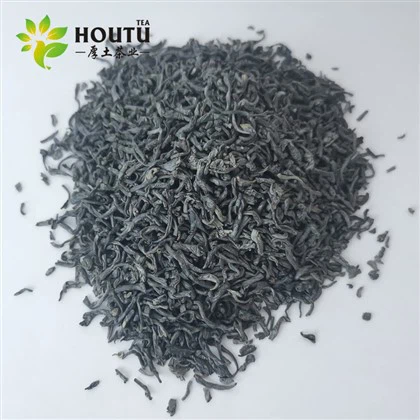
Tea image connected with the story
Real tea grows from Camellia sinensis; the eyelid story belongs to religious folklore.
Image source: HOUTU TEA public image library
Tea combines real plant qualities with centuries of human imagination
Contact Sophie for Chinese green tea samples and market-focused product discussion.
Email SophieWhatsApp Sophie
jessie@hoututea.com · +86 18888798057
Send Inquiry
Contact us if have any question

You can either contact us via phone, email or online form below. Our specialist will contact you back shortly.

Contact now!