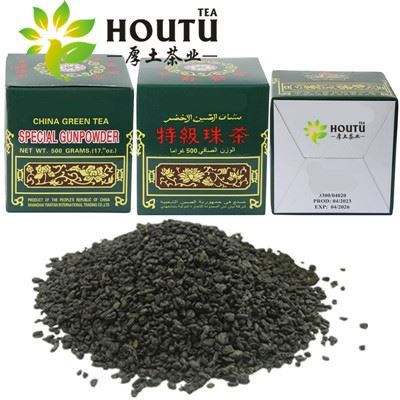
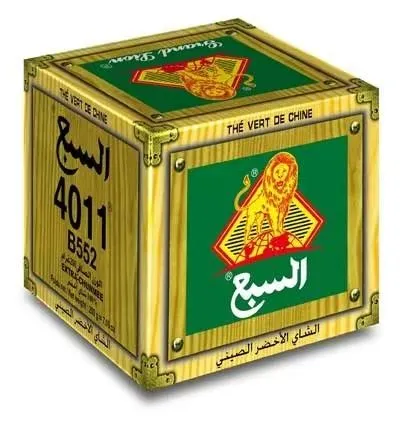
Gunpowder tea is named for its tight, pellet-shaped dry leaves resembling pearls, also known as round pan-fired green tea. It is mainly produced in Sheng County, Xinchang, Dongyang, Shangyu, Fenghua, Yinxian, Yuyao and other areas in Zhejiang Province, China. In the past, crude tea was centrally processed in Pingshui of Shaoxing, hence it is internationally referred to as Pingshui green tea.
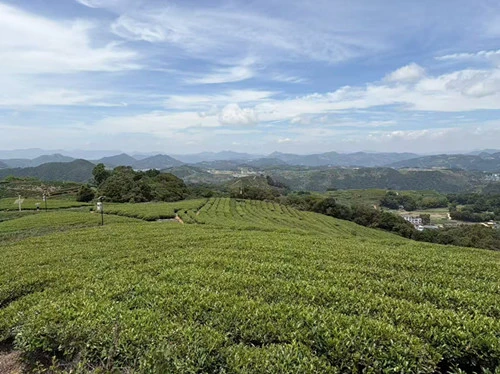
Quality Characteristics of Gunpowder Tea It features compact round pellet shape, glossy green colour, heavy and solid texture just like pearls, high aroma, rich taste, excellent resistance to repeated brewing, yellowish-green bright infused leaves with intact buds and leaves.
Fresh Leaf Picking Requirements The optimal picking standard is one bud with two to three leaves. The fresh leaves must reach high standards in tenderness, uniformity and freshness.

The primary processing of gunpowder tea consists of three major procedures: fixation, rolling and drying. The drying phase is further divided into four stages: first-step roasting (Erqing), small pot roasting, paired pot roasting and large pot roasting. The machinery used for fixation and rolling is identical to that applied in chunmee tea production. First-step roasting is carried out in a rotary drum roaster (bottle-type drying machine), while small pot roasting, paired pot roasting and large pot roasting all adopt dedicated gunpowder tea roasters.
Fixation The fixation technology for gunpowder tea is basically consistent with that for chunmee tea, with the core operational difference lying in the combined steaming-and-spreading fixation method (steaming first, spreading later). After fresh leaves are loaded into the 84-type fixation machine, they undergo sealed steaming for about 3 to 4 minutes. When massive steam escapes from the lid gap, the lid is opened for spreading and stir-frying until the leaves turn dark green and leaf stalks become flexible without breaking. The water content of fixed tea leaves ranges from 60% to 64%, with a weight loss rate of approximately 35% to 40%. This sealed-first-tossing-later fixation shortens processing duration, delivers emerald green leaf color and fresh clean aroma, showing better effects than tossing-first-sealed-later processing. The sealed stir-frying period for gunpowder tea fixation is 1 to 2 minutes longer than that for chunmee tea. Sealed stir-frying raises leaf temperature to soften leaf texture, prevents red stalks and red leaves, and facilitates subsequent shaping procedures. Nevertheless, excessively long sealed stir-frying shall be avoided to prevent stuffy water odor and over-yellowed leaf color. Appropriate prolonged sealed stir-frying helps achieve thorough and even fixation, especially reducing the degree of yellow discoloration during the lengthy subsequent drying process. Fixation parameters need to be flexibly adjusted according to raw leaf conditions.
Generally, rain-soaked and heavily dew-covered leaves require more tossing and less sealed stir-frying; plump terminal buds, tender leaves with long internodes and mature leaves need more sealed stir-frying and less tossing. Rolling Gunpowder tea adopts slightly shorter rolling time and lighter pressure compared with chunmee tea. To keep leaf texture soft, fixed tea leaves go straight into rolling without spreading for cooling. Tender leaves are rolled for around 10 to 15 minutes, while mature leaves take 15 to 20 minutes. Standards for proper rolling: cell damage rate reaches 45% to 60%, the strip forming rate of tender leaves is around 90%, and that of Grade 4 to 5 leaves is approximately 85%. Insufficient rolling time leads to low strip forming rate, which is unfavorable for forming the round pellet shape of gunpowder tea during stir-drying. Rolled tea leaves shall be properly broken up into loose pieces and sent for drying in a timely manner to prevent the leaves from turning yellow due to stuffiness.
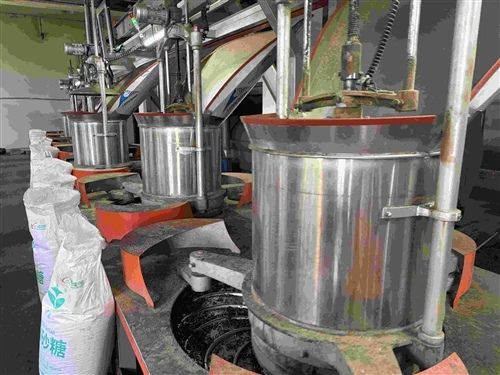
The drying process includes four stages: secondary drying stir-fry (Erqing), small pot stir-fry, paired pot stir-fry and large pot stir-fry, all of which can be completed on the Model 84 round tea roasting machine. Secondary drying can be carried out via pan stir-frying, drum stir-frying or oven drying. Drum secondary drying with a bottle-type roasting machine features high working efficiency and low equipment cost, which is more conducive to forming round tea grains and delivers better effects than oven-based secondary drying. At present, the four drying procedures of gunpowder tea are finished with two types of equipment: bottle-type roasting machines and Model 84 round tea roasting machines.
Secondary Drying Stir-fry (Erqing) Its main purpose is to evaporate part of the moisture so as to avoid caking or scorching during the subsequent stir-frying steps. The bottle-type roasting machine used for this procedure has a cylinder diameter of 90 cm and a length of 150 cm, capable of holding 6 to 7 kilograms of rolled tea leaves with the working temperature kept above 200℃. The moisture content of tea leaves after secondary drying directly affects the operation of the small pot procedure. Over-dried leaves are hard to form round pellets, while overly damp leaves tend to clump together. The moisture content of spring tea leaves after secondary drying is maintained at around 40%. Due to high temperature in summer, summer tea leaves lose water faster during roasting, so their moisture content is set at approximately 45%, higher than that of spring tea.
Small Pot, Paired Pot and Large Pot Stir-frying Small pot, paired pot and large pot stir-frying are all operated on the same round tea roasting machine, serving as the key procedures for shaping gunpowder tea into round grains. These steps share common operating skills while having respective unique purposes and technical requirements.