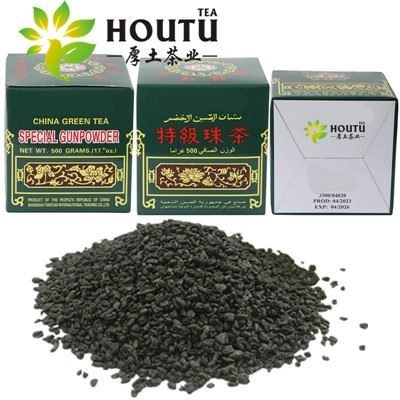
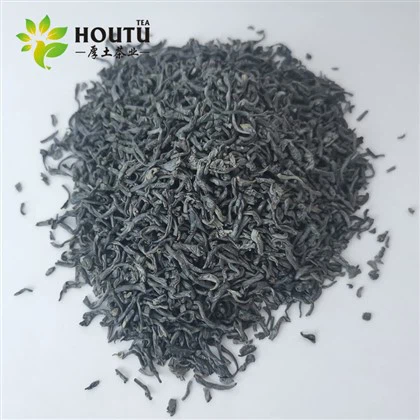
Due to the different effects of mechanical or manual force during the drying process, the finished tea forms different shapes such as long strips, round beads, flat fans, needles, and spirals. Green, flat fried green and so on.
Long-fried green tea is called Mei tea after being refined, and the finished products include Zhenmei, Gongxi, Yucha, needle eyebrows, Xiumei, etc., each with different quality characteristics. Such as Zhenmei: the rope is thin and straight or like the eyebrows of a lady, the color is green and frosty, the aroma is high and fresh, the taste is strong and refreshing, the soup color and the bottom of the leaves are greenish yellow and bright; Gongxi: It is a long fried green The round tea is called Gongxi after being refined. The shape of the particles is similar to that of bead tea, the round knots are even, without broken tea, the color is green, the aroma is pure, the taste is still strong, the soup color is yellow-green, and the bottom of the leaves is still tender and even; Most of the tea rain tea is obtained from Mei tea, the shape is short and tight, the color is green, the aroma is pure, the taste is still strong, the soup color is yellow-green, and the bottom of the leaves is still tender and even; Due to different origins and production methods, it is divided into Pingchaoqing, Quangang Huibai and Yongxi Huoqing.
Pingchaoqing: Produced in Zhejiang Shengxian, Xinchang, Shangyu and other counties. In history, Mao tea was refined and distributed in Pingshui Town, Shaoxing, and the finished tea was thin, round and tightly knotted like pearls, so it was called "Pingshui Pearl Tea" or Pinglu, while Maocha was called Pingchaoqing; They are mainly divided into three types: Longjing, Flag Gun and Dafang.