Export success depends not only on colour and fineness, but also on raw-material control, residue compliance, processing and documentation.
|
Growing Demand
Chinese matcha exports continue to attract international interest.
|
Farm-Level Control
Registered raw-material bases and pesticide management are central.
|
Technical Product
Colour, particle size, food safety and application performance all matter.
|
What the Customs Update Shows
China Customs reported that domestically produced matcha exports continued to gain momentum in 2026. The update emphasised support for export raw-material base registration, standardised pesticide use and field management.
This is important because matcha is consumed as the whole powdered leaf rather than as an infusion that is later removed. Buyers therefore pay close attention to residue control, microbiological safety, colour, particle size and traceability.
Matcha Is Different from Ordinary Loose Green Tea
Matcha production requires suitable raw material, shading or specific cultivation management, controlled processing and fine grinding. The final product may be used in traditional drinking, lattes, bakery products, confectionery, ice cream and other food applications.
The best specification depends on the intended use. A beverage product may prioritise bright colour and smooth mouthfeel, while a bakery ingredient may need stronger flavour, stability and a different price position.

What the Trend Means for Broader Green Tea Exports
Matcha demonstrates a wider direction in the Chinese tea industry: more product segmentation, stronger technical documentation and closer coordination between farms, factories and overseas customers.
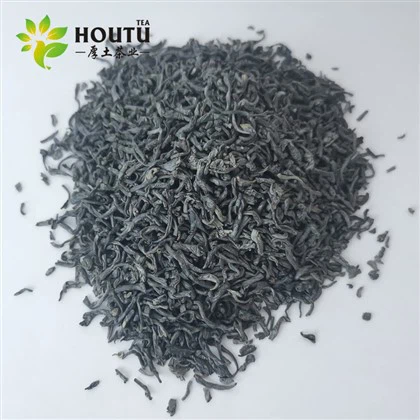
Even buyers of Chunmee or Gunpowder can benefit from the same discipline. Registered raw-material sources, controlled pesticide use, batch records and stable processing improve confidence across all green-tea categories.
Commercial Watchpoints
What to Monitor Next
The market should watch international matcha demand, food-application innovation and tightening residue requirements. Buyers should also compare Chinese matcha by application performance rather than relying only on visual colour or the price per kilogram.