How to Make
Traditional Moroccan Mint Tea
Moroccan Mint Tea and Moroccan Tea Culture

Historians differ as to when they believe tea was introduced to Moroccan culture.
Although some say it may have been as early as the 12th century, others claim that it
was only as recent as the 18th century. If the latter is correct, Moroccans were quick to
embrace tea drinking as a norm of their own, resulting in Morocco's current standing
as one of the top importers of tea worldwide.
Today, Morocco's famous mint tea—green tea steeped with a lot of spearmints—has
become symbolic not only of Moroccan cuisine but also of Moroccan hospitality and
culture. Many families serve the markedly sweet beverage several times a day with
or without food, and both drop-in and invited-company can expect to be offered tea
as a welcoming gesture. While the Moroccan tradition of honoring the guest may be
rooted in Islamic etiquette, Moroccans are renowned for elevating that standard of
hospitality to an exceptional level. As such, even new acquaintances and unexpected
guests will be encouraged to drink glass after glass of tea (to avoid offending the host,
it's wise to oblige!), and then pressed to stay on for a full meal.
Although tea making in the West is usually simple, in Morocco the process is a bit more
involved. The following steps show how the tea is typically prepared behind the scenes
in Moroccan kitchens. A more complex ceremonial method of preparing tea in front of
guests is employed less frequently, most notably at formal, special occasions.
The Moroccan Tea Service (Teapot, Glasses, and Tray)

This is a typical Moroccan tea service with an engraved Moroccan teapot (berrad), tea
glasses, and serving tray. Many families own at least one fine tea service which is
reserved for special occasions and serving guests, while a more casual pot and glasses
are used on a daily basis for family or close friends. What's shown here is middle-of-
the-road—neither too fancy for family tea time nor too casual to set out for any company.
Much more ornate glasses are often used.
Most Moroccan teapots may be placed directly over the fire, an essential step in the
process of making traditional Moroccan tea. If you don't have a Moroccan teapot, you
can buy one online or look for another style of a stovetop-safe teapot. Small three- to
four-ounce decorated tea glasses can also be found online or use very small juice
glasses in their place.
Green Gunpowder Tea and Mint

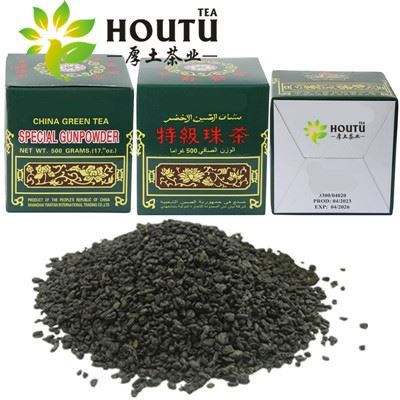
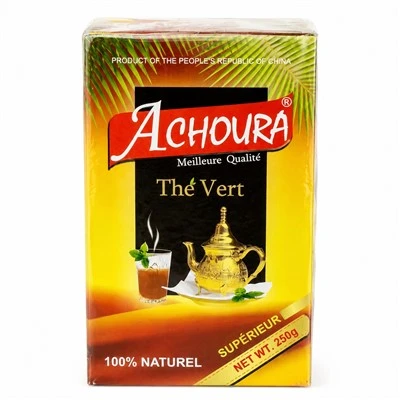
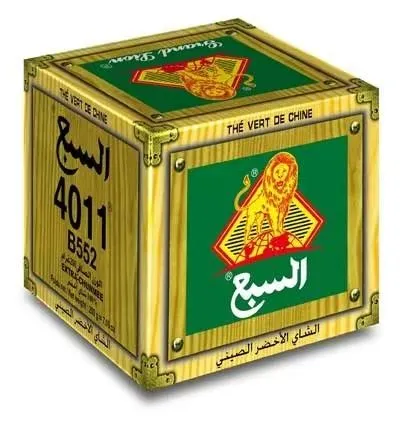
Chinese gunpowder green tea is preferred for making Moroccan tea. The "gunpowder"
refers to the compression of the dried tea leaves into tiny pellets; the more compact,
the better the quality. A slight sheen to the gunpowder tea is desirable as it indicates
freshness.
A generous quantity of fresh spearmint leaves—na'na in Moroccan Arabic—is also
essential to mint tea. Quite a few varieties of spearmint can be found in Morocco,
depending on the region and time of year. While fresh spearmint is the most popular
choice for mint tea, smaller quantities of dried peppermint leaves or fresh pennyroyal
may also be used, resulting in tea with a more pungent aroma and flavor.
Moroccan tea is not exclusively flavored with mint, however; other aromatic herbs such
as sage, wormwood, lemon verbena, wild thyme, and wild geranium are also used.
Don't Forget the Sugar

Moroccan mint tea is famously sweet, so do not forget the sugar (unless, of course,
you prefer it less sweet due to health concerns or personal taste).
Shown here are the two forms of sugar most often used by Moroccans in their tea-making
—a sugar cone weighing two kilograms and sugar bricks of about 30 grams each.
The sugar cone is preferred by traditionalists and connoisseurs, but since we don't
want to break it up—the cone is pretty solid, requiring a kitchen ax to whack it into
pieces—we'll be using the sugar bricks.
If you don't have access to either form of sugar, know that the three sugar bricks are
roughly equivalent to seven tablespoons of granulated sugar. By many Moroccans'
standards, this will not be enough sugar to properly sweeten the large pot of tea that
we'll make, but you might find that it's far too much. Feel free to adjust the quantity of
sugar in either direction to suit your own tastes.
Getting Started

Boiling water is, of course, a must for making the tea. Rinse out your teapot with a little
of the water before beginning.
Now, add your gunpowder green tea to the teapot (we're using two rounded tablespoons
here for a one-liter capacity pot) and pour in just a little bit of boiling water—about a tea
glass full. Leave it to sit undisturbed for a minute, then pour it out into a tea glass. Note
that the tea leaves swell and absorb some of the water, so you won't pour out as much
liquid as you poured in. Avoid the temptation to swirl the water around the pot before you
pour or you'll dirty the liquid.
This amber-colored liquid is referred to as the "spirit" or "soul" of the tea since it contains
full flavor from the water's first contact with the leaves. Save this tea; it will go back into
the pot a short while later.
Wash the Tea Leaves

Now you'll wash the tea leaves. Add another tea glass full of water to the pot. Leave it
to sit for a minute, then swirl it around the pot to wash the leaves. Pour out the murky
liquid and discard it.
Note the difference in color when comparing the undesirable rinse water to the clear,
clean "spirit" which will go back into the pot.
Ready Your Mint and Other Herbs

If you haven't already washed your mint, do so now. The most effective way to wash fresh
mint (and other herbs) is to immerse it in a bowl full of water, swish it around, then lift out to
drain.
Here, we are also preparing sheba to add to the tea along with the mint. Just a sprig or two
is usually sufficient, as the herb is quite strong. Wash it by briefly soaking it in boiling water,
which is simply poured over the sprig in a tea glass. (Note how the sheba's color changes
when it makes contact with the hot water.) This method removes some of the bitterness
associated with sheba.
Time to Steep the Tea

Now that the tea leaves are washed and the herbs are ready, fill the pot about two-thirds
full with boiling water and place on a burner over medium-low to medium heat. Pour the
reserved "spirit" back into the pot.
Add the Mint and Sugar

Once you see bubbles forming on the surface of the tea, add a bowlful of fresh mint—
gently push all the leaves down into the pot to submerge them—and then add the sugar.
Here we've also added the sheba. At this point the pot should be quite full; if the water
level hasn't risen to within an inch or so of the brim, go ahead and top off the pot with a
little more boiling water, but do leave some room to allow for boiling.
Bring the Tea to a Boil

Leave the tea on the fire until it comes to a boil. You'll first notice that the mint leaves
rise to the top, but eventually, the green tea leaves will break to the surface as the liquids
become bubbly and foamy.
You can remove the tea from the stove now. There's no need to stir. If the handle of your
teapot isn't heatproof, it will be quite hot. Use a cloth napkin or handle cover for picking up
the pot and serving.
Mix the Tea

Instead of stirring, Moroccan tea is traditionally mixed by pouring the just-steeped tea
into a glass and then pour the tea back into the pot. Repeat this process four or five times.
This mixing can be done in the kitchen or in front of guests.
A Moroccan teapot has a built-in strainer that prevents loose tea leaves from pouring
out of the pot. If your own pot doesn't have this feature, hold a strainer over the glass
as you pour.
Also note that the long, curved spout of a Moroccan teapot allows for accurate pouring
from high above the glass, which helps to aerate the tea so that a desirable foam head
will form on the surface.
Serve the Tea

Once the tea is mixed, it's ready to be served. Pour out the glasses of tea about two-thirds
to three-quarters full. Try to pour from an arm's length above each glass to get that nice
foamy head. Some Moroccans place a sprig of fresh mint leaves directly in the glass of tea.
Moroccan tea can be served with meals, dried fruits, and nuts, an array of sweets, or
other Moroccan tea time recipes. Or you can choose to serve with absolutely nothing at all.
You may also use other herbs or spices in place of mint.