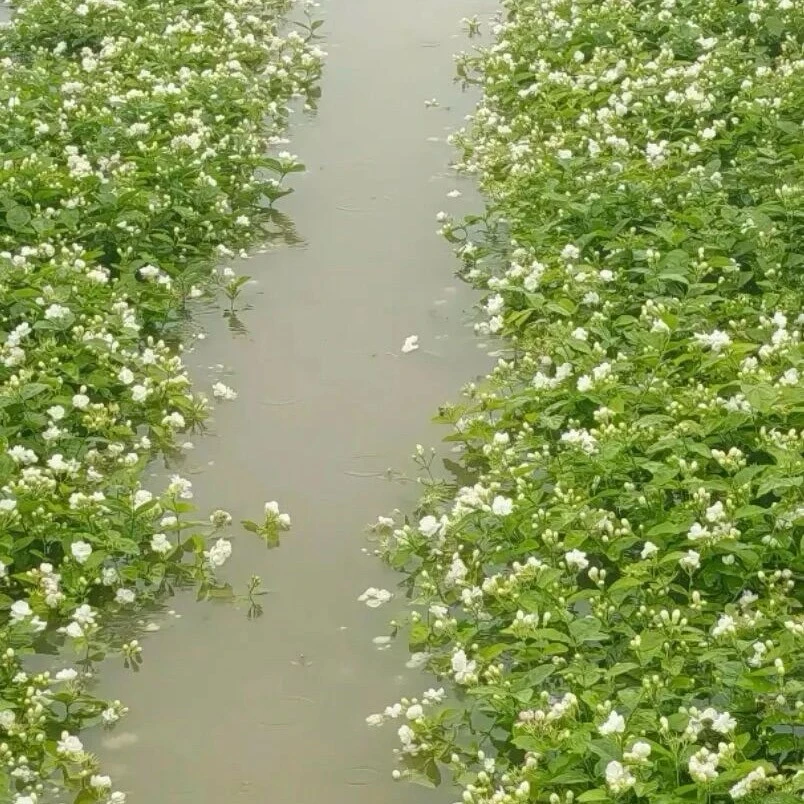
As floodwaters recede, Hengzhou in Guangxi, known as the "World Capital of Jasmine", has fully launched post-disaster recovery and agricultural resumption. Supplying over 80% of China's jasmine raw materials, Hengzhou's pillar jasmine tea industry has suffered heavy losses worth nearly hundreds of millions of yuan, including flooded factories, damaged tea stocks, interrupted flowering periods and strained industrial supply chains.
1. Disaster Impact & Market Changes July to September is the peak flowering and harvest season for jasmine. Affected by flooding, waterlogging and lodging, the local jasmine output in July is expected to drop by 30%–40%, while the impact will ease to about 10% in August. Severe supply shortage has triggered drastic price increases. Before the flood, daily fresh jasmine purchases reached 20,000–25,000 kilograms; currently only about 5,000 kilograms can be collected per day. The purchasing price of fresh jasmine has surged 7 to 8 times, hitting a record high. Most local tea processing factories have suspended production due to soaked equipment and insufficient raw materials, putting the entire jasmine tea supply chain under huge pressure.
2. Scientific Post-disaster Recovery & Field Management Hengzhou authorities have released official technical guidelines for post-flood jasmine maintenance, with university expert teams providing on-site guidance: • Rapid drainage and field cleaning: Dredge field ditches, pump out stagnant water, wash silt off leaves, and remove rotten branches to prevent plant diseases. • Soil restoration: Apply quicklime and shallow tillage on waterlogged and acidified fields to improve soil structure and control root rot. • Classified pruning & maintenance: Lightly damaged plants are cleaned and preserved for blooming; severely damaged branches are deeply pruned to promote new bud growth. Fields with minor damage have resumed flower picking and purchasing to maximize remaining seasonal output.
3. Enterprise Solidarity & Social Support
During the disaster, local jasmine tea enterprises united closely. Factories offered free warehouses to store and protect undamaged tea materials, minimizing collective industrial losses. Domestic brands donated millions of funds and supplies for resident resettlement, flower field restoration and industrial recovery. Water supply, power supply and rural infrastructure are gradually restored, and farmers have returned to fields for self-rescue production. 4. Long-term Industrial Upgrade Plan Local authorities emphasize both short-term production recovery and long-term infrastructure improvement. The city will upgrade farmland water conservancy and flood drainage systems, strengthen disaster resistance capabilities, and further consolidate Hengzhou's core position as the world's leading jasmine tea production base.