Science and technology innovation empowers Zhejiang tea to form its core essence
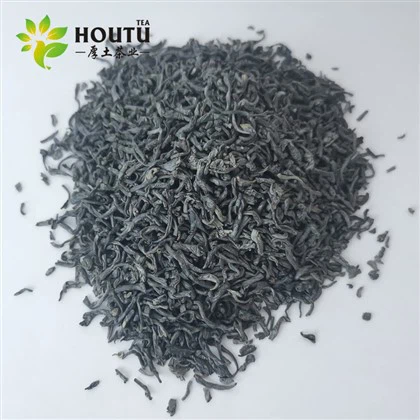
Recently, reporters visited the Shengzhou Comprehensive Experimental Base of the Tea Research Institute of the Chinese Academy of Agricultural Sciences, the "smart brain" of the Chunmee tea and Gunpowder tea industry. Following the winding mountain road, rows of tea trees cascade down the hillside, where researchers collect samples and record key indicators in real time.
"The base covers 341 mu (approximately 23 hectares), including a national-level tea germplasm resource nursery preserving over 5,000 new breeding materials. Currently, the main varieties promoted are 'Zhongcha 108' and 'Longjing 43'," explained Zhang Jianyang, deputy director of the Shengzhou base. He added that the base's research team has focused on breeding breakthroughs in disease and pest resistance, high aroma, and mechanization suitability, resulting in 28 national-level improved varieties. Among them, four new mechanization-suitable varieties have successfully filled industry gaps, removing varietal barriers for the mechanized and large-scale development of the tea industry. Ecological cultivation, soil improvement, and green pest control technologies have been implemented effectively and widely applied, laying a solid foundation of high-quality and safe raw materials for Chunmee tea and Gunpowder tea exports.
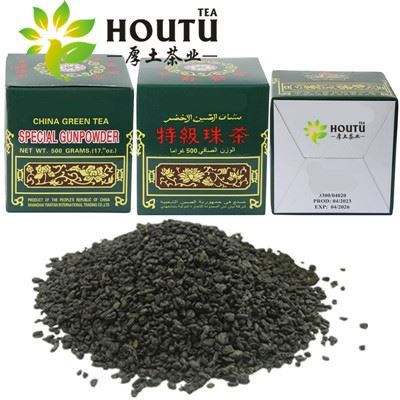
Scientific and technological innovation is empowering not only the fields but also the workshops. In the production workshop of Shengzhou Houtu Tea Co., Ltd., baskets of tea leaves undergo a series of standardized and meticulous processes, including sorting, refining, blending, and packaging, to become high-quality tea exported overseas.
It is reported that in recent years, Shengzhou City has vigorously introduced advanced equipment such as intelligent color sorters, electrostatic impurity removers, X-ray machines, and automated aroma-enhancing machines, building the province's first intelligent Gunpowder tea production line. With "equipment replacing manpower, data-driven quality control, and intelligent quality improvement" as its core, the city has achieved full-process digital management of tea production, from "green leaf input to finished product output," with a daily processing capacity of 100,000 kilograms of green leaves. Processing efficiency and quality stability have been comprehensively improved, and the standardization level and core market competitiveness of exported tea have been significantly enhanced.
Product innovation is another trump card for Zhejiang tea going global.

"The Chunmee tea and Gunpowder tea industry not only carries the mission of inheriting and developing traditional characteristic industries, but also directly relates to the national industrial development strategy. We must drive the Chunmee tea and Gunpowder tea industry from 'quantity-oriented' to 'quality-oriented' through the 'dual-engine' approach of technological innovation and standardization," said Yang Xiufang, Party Secretary and Director of the Hangzhou Tea Research Institute of the All China Federation of Supply and Marketing Cooperatives.