1.Accelerate diversified layout launch the industrial breakthrough battle
Kenya and Morocco reach a strategic cooperation agreement on tea between governments
According to estimates from the Kenyan National Bureau of Statistics (KNBS), the country's tea exports will reach a new high of 653000 tons in 2025, a year-on-year increase of 4.35%. However, the export value will shrink for the first time since 2019, reaching about 1.44 billion US dollars, a decrease of 1%. The average auction price in Mombasa will drop from 2.19 US dollars per kilogram in 2024 to 2.15 US dollars per kilogram.
To enhance its core competitiveness, Kenya continues to strengthen its industrial layout:
-Promote the transformation and upgrading of the industrial chain
Focusing on large-scale ecological management of tropical highlands, constructing new specialty tea factories, and promoting geographical indication (GI) certification.
-Introducing automated production lines and green processing technology to improve efficiency and environmental standards
Actively engage in technical cooperation with China, FAO, and other organizations to improve tea tree varieties, promote the world's first "low-carbon tea" certification, and upgrade transportation infrastructure.
-Strengthen policy support
Through the 2025 Finance Act, the value-added tax on local tea will be abolished, zero tax rates will be implemented on packaging materials, tea factories will be allowed to directly supply the international market, distribution will be strengthened, and a formal tea auction window is planned to be launched under the comprehensive tea trading system in June 2026.
-Actively exploring emerging markets in the Middle East and Central Asia
Under the shrinking traditional markets in Sudan and Yemen, Oman (with a 569% increase in imports by 2025) and Kazakhstan have achieved significant growth. Especially in 2025, Kenya and Morocco reached a key trade breakthrough, with Morocco committing to significantly increase Kenya's imports of tea and coffee.

2. India plans to enter the North African market by 2026
According to data from the Indian Tea Board, India's tea exports will reach 280400 tons in 2025, with a significant increase in exports to the United Arab Emirates, Iraq, and China. Previously, Indian tea enjoyed zero tariff treatment with the United States, However, with a 50% additional tariff imposed in 2025, exports to the United States dropped to 15,200 tons.
To expand tea exports, India is taking systematic measures:
-Increase policy and financial support
Introduce a special support plan for plantation development, quality improvement, and technological research and development; Implement multiple export incentive measures, including subsidies, tax incentives, and financial support.
-Market diversification and key breakthroughs
Deeply cultivating traditional markets such as the United Arab Emirates, Iraq, and Iran, vigorously expanding into the Chinese market, and clearly targeting the North African market (including Morocco, Algeria, and Tunisia) as a key target, and establishing tea enterprise service points in Africa.
-Improve export quality and competitiveness
Strengthen pesticide residue testing, promote standardization and branding, optimize auction mechanisms, achieve price discovery, standardized transactions, and export ratios of over 80%.
2.Stable tea consumption, cross-border blue ocean emerging
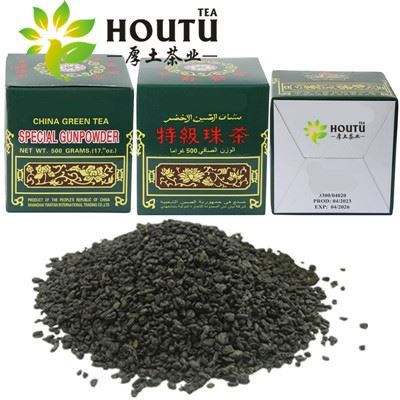
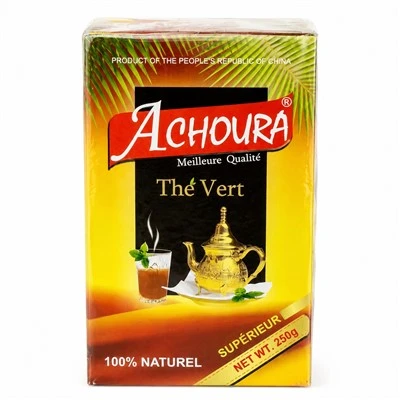
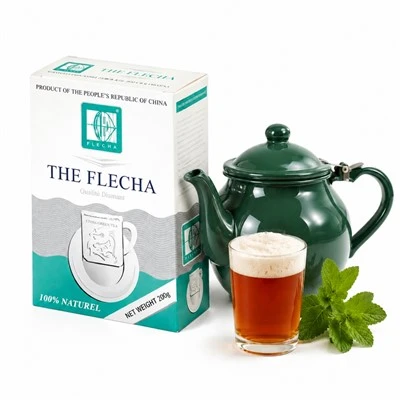
Morocco ranks seventh in the world in terms of tea imports, with an average annual import of green tea accounting for over 20% of global green tea imports and over 60% of African green tea imports. In addition to green tea, we also import black tea, oolong tea, flower tea, Ma Dai tea, and tea concentrate.
In 2025, the import of green tea from China exceeded 90000 tons for the first time, with the top five provinces being Zhejiang Province (65000 tons, 190 million US dollars), Hubei Province (10000 tons, 27.439 million US dollars), Hunan Province (8959.7 tons, 27.04 million US dollars), Anhui Province (3306.3 tons, 10.697 million US dollars), and Guizhou Province (1221.5 tons, 4.167 million US dollars).

In recent years, the consumption of Moroccan tea has shown the following changes:
1. Tea consumption in the southern Sahara region is steadily increasing;
2. Young people attach greater importance to the health, quality, safety, and preventive health functions of tea;
3. With the upgrading of traditional consumption structure, the demand for functional fruit tea and herbal tea is gradually increasing;
4.The rapid development of modern retail and cross-border e-commerce provides more choices and potential opportunities for tea consumption and transit trade.
In particular, Morocco, which guards the Strait of Gibraltar, has signed free trade agreements with 56 countries and regions, including the European Union, the United States and Türkiye, covering the global market of nearly 1 billion people. It has both the growth potential of the African market and the compliance and logistics foundation of the European market, and has become an important trade hub for foreign investment into the European, American and African markets.
3.Short term market impact limited, long-term disturbance still exists
From the perspective of consumption habits, Morocco is a country embedded in green tea culture. This deep-rooted habit of drinking green tea is difficult to change in the short term, and black tea consumption cannot replace the urgent need for green tea in the short term.
From a long-term perspective, countries such as Kenya mainly produce CTC black tea, as well as small amounts of green tea, flower tea, and specialty tea. They have established a "natural and pure" image in the international market, relying on standardization, large-scale processing, circulation, and management. With the support of a complete industrial chain loop of "planting production auction export", the quality and price advantages are obvious. With the gradual penetration of the market, it may occupy some of the green tea market consumption share in the catering, bulk raw material, or blending fields.
In the current rapidly changing global trade landscape, the Chinese tea export industry should attach importance to overseas warehousing, shorten supply chain losses, enhance cultural identity through brand localization, and explore high-end markets through quality upgrades. The competition dimension should be transformed from price internalization to a comprehensive advantage of "supply chain efficiency+brand value+product differentiation". While consolidating the traditional core market, it should gradually achieve a strategic transformation from raw material export to value output and brand output.