TEA KNOWLEDGE · ARTICLE 43
A complete tasting follows the tea from hot to warm to cool
The best cup is not always the one that makes the strongest first impression.
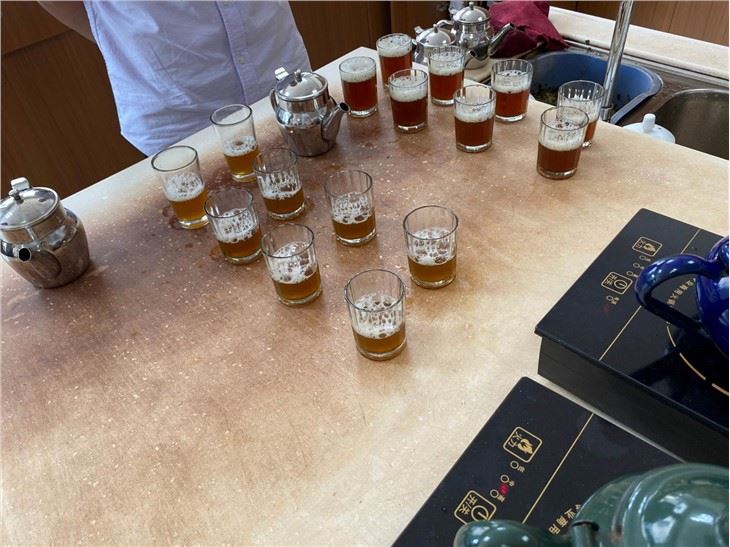
Temperature changes aroma release and how the mouth perceives flavour.
The first hot sip is only one stage of the cup
A very hot cup releases aroma quickly, but heat can also make it difficult to notice subtle flavours. As the tea cools, some aromas become easier to recognise and sweetness or astringency may feel different.
The tea itself is not necessarily changing dramatically in a few minutes. Much of the difference comes from aroma release and the way temperature affects sensory perception.
| Cup temperature | What may stand out |
|---|---|
| Very hot | Strong steam aroma, less detail and possible heat discomfort. |
| Warm | A clearer balance of aroma, sweetness and briskness. |
| Cooler | Aftertaste, astringency and some subtle aromas become easier to notice. |
| Cold | Less volatile aroma, but sweetness or bitterness may be perceived differently. |

Tasting the same tea at several temperatures gives a more complete impression.
Why buyers should taste beyond the first minute
A tea may smell impressive when very hot but become flat as it cools. Another tea may begin quietly and develop a clean, sweet finish. Evaluating the cup over ten or fifteen minutes helps reveal these differences.
✓
Smell immediately after pouring.
✓
Taste when the cup is comfortably warm.
✓
Taste again after several minutes.
✓
Record aftertaste and mouthfeel.
✓
Compare every sample at similar temperatures.

Floral and roasted aromas can behave differently as the cup temperature changes.
For ready-to-drink products
A tea designed to be served cold should be evaluated cold, not approved only from a hot laboratory cup.
Will your tea be served hot, warm or chilled?
Tell Jessie the serving style and desired flavour. Samples can be tested under the real consumption temperature.
jessie@hoututea.com · +86 18888798057
Reference basis: Peer-reviewed sensory and aroma-release research on tea temperature, brewing and cooling.