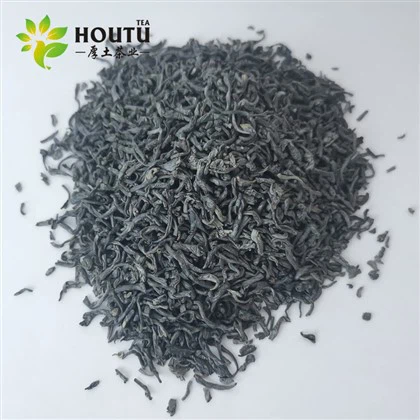
Core Conclusion: In the bulk trade of African chunmee tea, appearance evaluation is the first hurdle for buyers before they offer a price. The four key qualities-tight, straight, uniform, and whole-correspond to four crucial dimensions of the tea's appearance, each directly impacting grade and unit price.
Analysis of the Four Qualities and Pricing Weights
**Tight (Heavyweight):** The tea leaves are tightly rolled like eyebrows, feeling firm and bony when rubbed between the fingers. The tighter the leaves, the more thoroughly they have been kneaded, resulting in higher tenderness and the highest grade. Loose leaves crumble easily when rubbed, indicating coarse, old raw materials, with price differences reaching 30%-50%.
**Straight (Aesthetics):** The tea leaves are straight and well-proportioned, without bending or twisting. Straight leaves result in a neat appearance and better packaging; bent and tangled leaves result in greater losses during sieving, which buyers may use to lower prices.
**Uniform (Consistency):** Tea leaves from the same batch are uniform in length and thickness. Highly uniform tea leaves can be blended directly without secondary sieving, making them popular in the market; those with uneven quality are classified as ""mixed goods"" and require price reduction.
* **Integrity (Completeness)**: Tea leaves should be whole and have a low content of broken leaves. Broken leaves not only affect the clarity of the brewed tea but also mean a lower proportion of usable whole tea leaves. Buyers often manually check the bottom of the leaves during inspection; a high amount of broken leaves results in a direct deduction from the net weight for pricing.
* **Hard Investment in Refining**
To meet the ""four-character"" standard, raw tea must undergo multiple processes in the refining workshop:
* **Repeated Sieving:** Grading based on the length and thickness of the tea leaves;
* **Wind Selection:** Using wind to separate tea leaves of different weights, removing light and inferior leaves;
* **Sorting:** Manually or by machine removing yellow leaves, tea stems, and non-tea impurities.
While this refining process increases processing costs, it is the cornerstone of the quality that allows chunmee tea to achieve high-grade certification and win millions of orders. If the appearance is substandard, even the best internal quality will struggle to fetch a good price.
African buyers price their products based on appearance-only those that meet these four criteria (tight, straight, flat, uniform, and intact) are qualified to negotiate higher prices; every screening process in the refining workshop adds to the order amount.