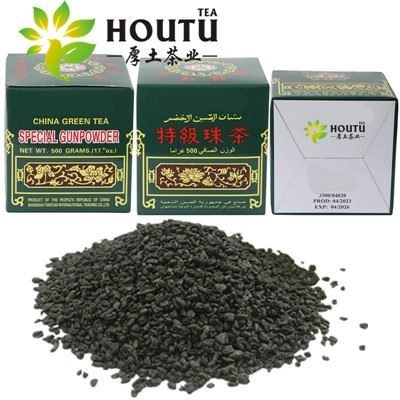
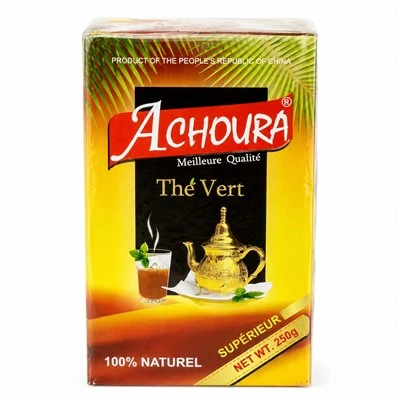
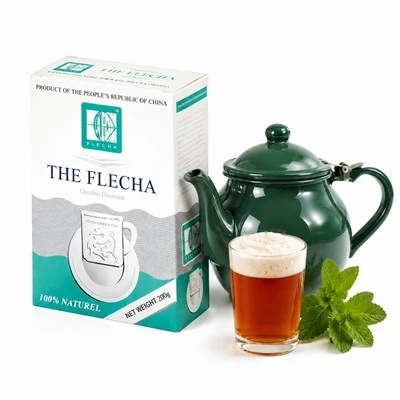
1. Core red line: Only what is in the standard can be marked, and what is not must not be written
According to Article 4.1.11 of GB 7718-2011 "General Rules for the Labeling of Prepackaged Foods", if the quality grade is clearly specified in the product standard, it must be labeled strictly in accordance with the standard; if not specified, no grade can be labeled.
The newly revised GB 7718-2025 also further clarifies that if the quality grade has been specified in the applicable standard, it should be indicated; otherwise, it shall not be indicated.
That is to say: ✅ "Special Grade" is not a term you can just write as you like
❌ Terms not listed in standards such as "First Class" and "Premium Grade" cannot be used at all
In short: Whatever is in the standard, write it down; even a single word is not acceptable
2. "Lessons Learned from Past Mistakes" in the Non-Tea Industry: A Fine of 15,000 for Grade Mislabeling
The label of a certain goji berry product states "Quality Grade: First Grade", but the implementation standard GB/T 18672-2014 "Goji Berries" only allows for grades such as Extra Superior, Extra Grade, Grade A, and Grade B.
There is no such level as "first-level".
Result: The regulatory authority fined 15,000 yuan and ordered a correction within a specified time limit in accordance with Article 125 of the Food Safety Law (Source: Nanning City Supervision Bureau's 2021 unannounced inspection case). The tea industry is also subject to this regulation, so don't think it's a trivial matter.
3. Three typical cases of "misleading labeling" in the tea industry, and suggestions for self-examination
Case 1: A yellow tea product, which follows the GB/T 18665 standard without any quality grades, arbitrarily labels itself as "special grade" or "first grade".
However, the enterprise labeled it as "special grade" on the packaging, which constitutes false labeling.
Case 2: The grade does not match the standard, or the standard is "elevated". The jasmine tea standard GB/T 22292-2017 specifies grades: special, extra-grade, first to fifth grade, broken tea, and sliced tea.
Some companies label "first-class" as "Grade A" or "second-class" as "first-class", which may seem like a minor difference, but in fact, it is prohibited by the standards.
More serious: A tea enterprise in Chongqing produced "Yiju Green Tea", labeled as "Special Grade" on the front and "First Grade" on the back, but it was found after testing that it did not even meet the second-grade standard. The final outcome: ordered to make corrections + fined + confiscated illegal income.
Case 3: Confusion of Geographical Indication Product Grades
West Lake Longjing Standard DB3301/T 1135-2023 Grades: Fine, Special Grade, First Grade, Second Grade.
Some companies label ordinary green tea that is not West Lake Longjing as "West Lake Longjing Special Grade",
Falsification of origin + mislabeling of grades, both constitute violations, leading to heavier penalties, and may even result in the revocation of qualifications.
4. Key reminder: standards vary, and grades cannot be "generalized"
The "National Food Safety Standard for Tea" (GB 31608-2023) only determines whether the tea has deteriorated or has an off-flavor, and does not evaluate its quality grade.
The grading of tea leaves must be based on the exclusive product standards of the corresponding tea category:
For green tea, follow the standards for green tea; for black tea, follow the standards for black tea; they cannot be mixed.
So: ✅ "First-class" cannot replace "Special-grade"
✅ "Grade A" cannot replace any grade in the standard
✅ A single word difference leads to false labeling
5. Randomly marking grades will result in direct legal consequences
According to Article 125 of the Food Safety Law, any act of mislabeling or falsely labeling quality grades is subject to a fine ranging from 5,000 yuan to 50,000 yuan.
In the aforementioned case of goji berries, a fine of 15,000 yuan was imposed. There are also real-life cases in the tea industry where fines ranging from 1,000 yuan to tens of thousands of yuan were imposed. Even for small tea companies, the combination of fines, product removals, rectifications, and damage to reputation is far more painful than the extra money they might have made.
6. Three practical suggestions for tea enterprises and tea merchants
1. Immediately conduct a self-inspection of the packaging: confirm what standards the product adheres to. Check if there are any requirements for "quality grade" specified in the original standard. If there are no such requirements, resolutely do not label the grade. If there are requirements, label word-for-word and do not rewrite it without authorization
2. Establish a label review system
Before packaging new products, at least two people should cross-check the standards
If necessary, entrust a third-party testing agency or compliance agency for review
3. Don't use "I think it's of good quality" as an excuse
Quality level is not determined by feeling, but by standards
If you want to label a product as "special grade", you should produce products that meet the special grade standards and use the corresponding product standards
7. Reminder for tea lovers: Don't just look at the "special grade" label
When buying tea: pay more attention to the aroma, taste, and texture of the tea leaves themselves, and take a glance at the product standard number and quality grade on the packaging to see if they match
If you notice any obvious mislabeling (such as writing "special grade" when the standard has no grade, or grade names that do not match the standard), you can report it to the regulatory authorities. Real good tea speaks for itself through its quality, not through the words on the packaging.
In summary, the labeling of tea quality grades should follow the standard: label what is specified, do not label if there is none, do not add new information, do not alter existing information, and do not arbitrarily raise the grade.
Only by adhering to compliance standards and operating with integrity can we maintain stability and sustain progress under increasingly stringent supervision.
Maintaining the bottom line of labeling is equivalent to safeguarding the reputation of tea enterprises and preserving consumers' trust in a cup of good tea.