Longjing Group Variety, commonly called old tea bushes or original Longjing among tea lovers, is the ancestor of all Longjing teas and a precious ancient heirloom tea cultivar.

🌿 What exactly is Longjing Group Variety? It is not a single cloned cultivar, but a large natural tea family developed from generations of tea bushes with diverse genetic features.

• Sexual propagation: Tea trees grow naturally from tea seeds, forming genetically varied populations.
• Unique individual differences: Each bush differs greatly. Their budding time can vary by up to 50 days. Leaves also come in long shapes, round shapes, melon-seed shapes and various bud colors.
• Rich inner substances: Fresh leaves contain abundant nutrients. Spring tea of one bud and two leaves contains about 4.0% amino acids and 19.7% tea polyphenols. Though the dry leaves look irregular, the finished tea delivers far richer layered flavors.
✨ Main Characteristics
• Deep roots & strong adaptability: These bushes grow sturdy taproots deep into soil to absorb nutrition. They are much more resistant to cold, drought, pests and diseases than clonal varieties.
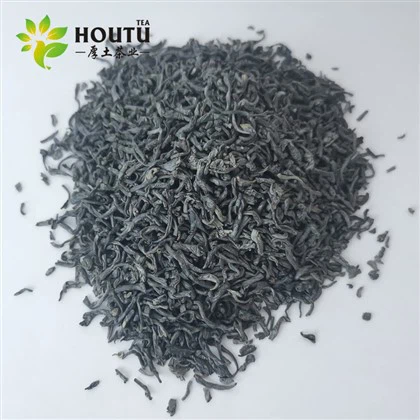
• Distinct complex quality: Processed tea shows yellowish-green uneven leaves. Once brewed, it releases rich multi-layered aroma. Besides fresh bean notes, subtle floral fragrance can be detected. The liquor is thick, full-bodied and highly resistant to repeated infusions.
• Late picking & low yield: Its plucking season is 7 to 10 days later than Longjing 43, usually from late March to around Pure Brightness. Uneven sprouting also results in relatively low output.
🍵 Group Variety VS Longjing 43 Both have their own strengths. The core difference lies between traditional terroir flavor and modern high-efficiency cultivation.

Overall, the group seed variety carries the most traditional and original flavor of Longjing tea. Trading uniform appearance for rich, layered taste, it delivers the authentic classic Longjing sought after by seasoned tea drinkers. By contrast, Longjing No.43 plays a dominant role in the modern tea market, thanks to its neat attractive shape, earlier picking season and higher yield.