How Stir-frying Temperature Shapes the Flavor of Green Tea

Jul 16, 2026

Leave a message

Core conclusion: Fried green tea is the key process to ""fix"" the flavor of green tea. The slightest difference in pot temperature not only determines whether characteristics such as ""blooming"" or ""toad's back"" appear on the appearance, but also fundamentally shapes the final direction of aroma and taste.


The formation mechanism of two major temperature characteristics

Blooming (white frost-like luster on the surface): When the temperature of the green pot is properly controlled, moderate rolling and slow frying are performed, the caffeine and polysaccharides on the surface of the tea leaves will crystallize and precipitate as the water evaporates, forming a layer of frost-like luster. Gunpowder tea with obvious blooming often has a high aroma and strong taste, and is regarded as a sign of high quality in the African market.


Toad's back (tiny brown spots): If the area is heated unevenly or the pot temperature is too high during frying, chlorophyll will be partially degraded at high temperatures and polyphenol oxidation products will accumulate locally, which will form small, dense brown spots on the leaf surface, resembling the back of a toad. This feature occasionally appears in traditional high-flavor green tea, but is usually regarded as a craftsmanship flaw in exported tea and will affect the appearance score.


Specific effects of temperature on flavor

The temperature is on the high side (close to the critical point of coking): the tea leaves produce a high fire aroma or even a burnt aroma, a strong and dry taste, and the soup is yellowish in color. Slightly high fire is mistaken for ""more flavorful"" in some markets, but too high a fire will produce a burnt and bitter taste, which will directly downgrade it.

The temperature is low (the greening is not transparent): the grassy smell remains, the aroma is dull, and the taste is green. This type of tea is prone to deterioration after storage, and the risk is extremely high in the high temperature and high humidity transportation environment in Africa.


Just the right ""fire power"": rapid killing at high temperature completely inactivates enzyme activity and locks in the bright green color; subsequent slow frying promotes the Maillard reaction and caramelization reaction, generating pyrazines, furans and other aroma substances, forming the iconic high aroma and rich taste of gunpowder tea.


Differences between fried green gunpowder tea and chunmee tea

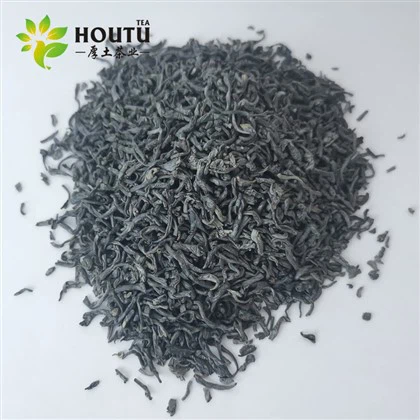
Gunpowder tea: After being greened at high temperature, it is stir-fried over slow fire or rolling to form pearls. The longer time is conducive to the full development of the aroma, forming a ""high aroma and strong flavor"" style, which is in line with the taste preferences of African consumers.

Chunmee tea: The frying pays more attention to rapid shaping and keeping the strips straight. The firepower is mainly medium to high and the time is short to avoid bending and deformation of the strips.

The temperature of the green pot determines whether a pot of tea is ""frozen and fragrant"" or ""overheated and stained"" - temperature is the mother of flavor and the soul of craftsmanship."

info-1017-677

Send Inquiry
Contact us if have any question

You can either contact us via phone, email or online form below. Our specialist will contact you back shortly.

Contact now!