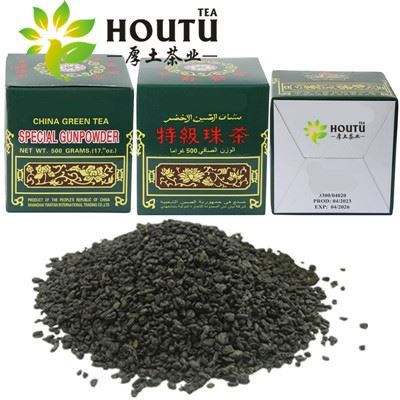
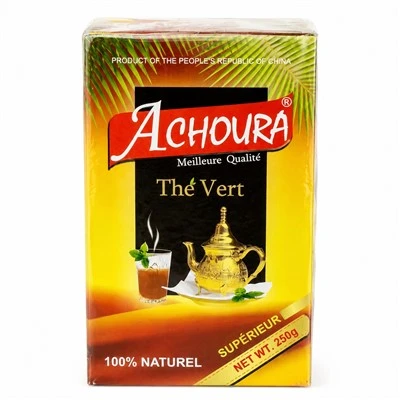
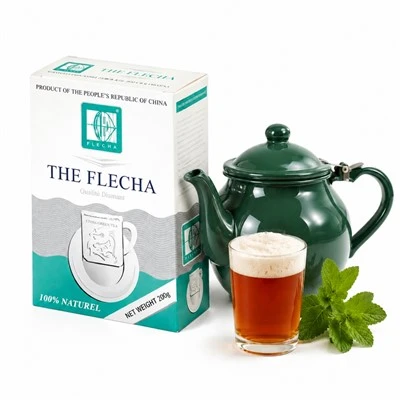
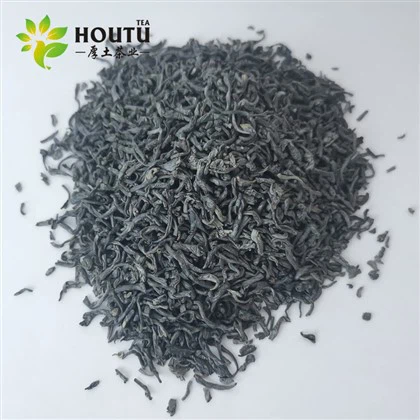
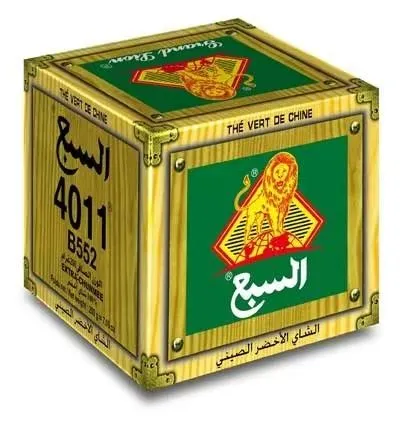
Tribute tea refers to Shengzhou gunpowder tea, also known as Pingshui Gunpowder Tea and Rizhu Tea. As one of the Famous Chinese Cultural Teas, Pingshui Gunpowder Tea originates from Pingshui Town, Keqiao District, the only designated Hometown of Chinese Gunpowder Tea nationwide. According to textual research, gunpowder tea originated in the Song Dynasty, took shape in the Ming Dynasty, became imperial tribute tea in the early Qing Dynasty and began large-scale export overseas. During the Ming and Qing dynasties, Pingshui evolved into a distribution hub for tea processing and trade. After the opening of Ningbo, Shanghai and other trading ports in the 23rd year of the Daoguang reign of the Qing Dynasty (1842), Pingshui Town grew into China's core processing center and major distribution base for gunpowder tea. From this period onward, Pingshui Gunpowder Tea rose to widespread fame, well-known to tea merchants at home and abroad. It ranked among China's most renowned famous teas and one of the earliest exported tea varieties, earning the reputation of "Green Pearls".

Pingshui Gunpowder Tea features round and compact dry tea grains with emerald green colour. When brewed, the bead-like tea leaves unfurl slowly like blooming flowers. Its tea liquor is emerald green and clear, with fresh and tender infused leaves, delicate fragrant taste and outstanding endurance for repeated infusions. As early as July 2012, the craftsmanship of making Pingshui Gunpowder Tea was inscribed on the fourth batch of Zhejiang Provincial Intangible Cultural Heritage List.
The production of Pingshui Gunpowder Tea includes primary processing and fine refining, among which primary processing is the critical procedure with rigorous stir-frying techniques covering three major steps: fixation, rolling and drying. Fixation serves three core purposes.
First, it thoroughly deactivates enzyme activity to preserve chlorophyll. Tea contains polyphenol oxidase; failure to inhibit this enzyme promptly will cause the tea leaves to turn reddish.
Second, it evaporates excess moisture and eliminates the raw grassy odour of fresh tea.
Third, it facilitates the formation of internal substances, reduces water content and softens tea leaves for subsequent rolling and shaping. The main goal of rolling is to break leaf cells and twist fixed tea leaves into tight strips. Tender fresh leaves adopt cold rolling to avoid heat generation during rolling which would impair the dry tea aroma; mature leaves require hot rolling to decompose internal chemical components for tighter shaping.
The drying process shapes rolled tea strips into round pellets through four successive stir-frying stages: second drying stir-fry, third drying stir-fry, medium pot stir-fry and large pot stir-fry. This lengthy process gradually rolls the tea materials into uniform round granules.

It takes more than ten hours to manually stir-fry one batch of gunpowder tea, involving extremely heavy physical labor. Hence there is a local saying that "Making a catty of tea costs a catty of sweat all day long, and tea farmers will get worn out after a whole tea-picking season".