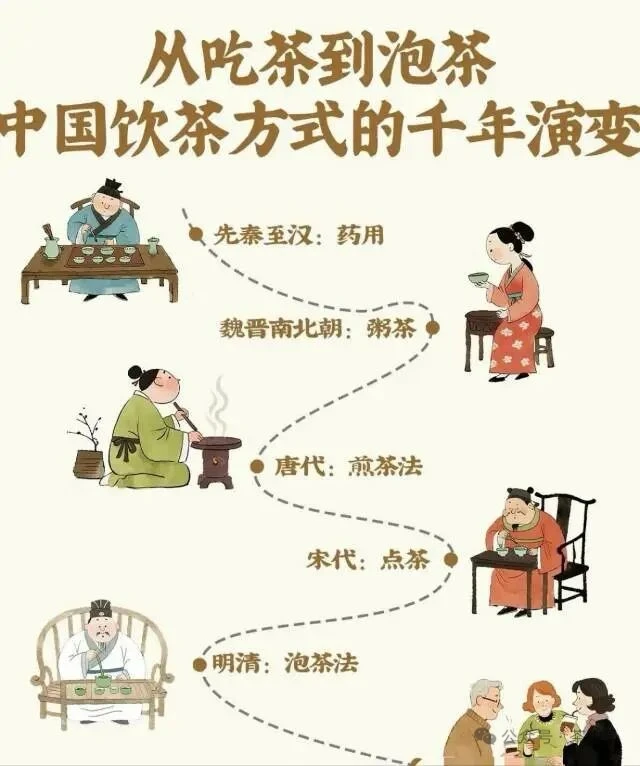
We can trace this subtle one-character difference along the timeline to see how the transformation unfolded:
• Before the Tang Dynasty (Eating Tea): Tea was truly consumed as food. In the era of Shennong testing hundreds of herbs, tea served as an antidote, and fresh tea leaves were chewed directly. During the Qin and Han dynasties, ancient people boiled tea leaves into "ming congee", consuming both the liquid and the leaves entirely to refresh the mind and stave off hunger. Back then, tea was treated as food, cooked together with green onions, ginger and dried tangerine peel, much like a thick vegetable soup.
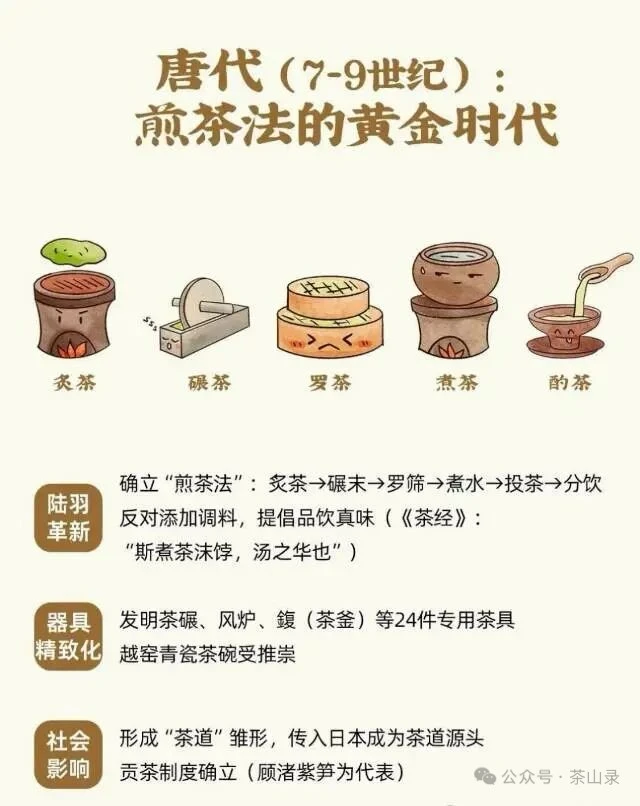
• Tang Dynasty (Half-Eating, Half-Drinking): Compressed tea cakes prevailed. Before consumption, the cakes were roasted and ground into fine powder, then boiled with boiling water to make tea soup. The tea powder stayed suspended in the liquid, turning the brew milky white. Lu Yu stated that the frothy cream was the finest essence; people swallowed the soup together with the powder. Essentially, it was still consuming powdered tea, yet the focus had shifted toward tasting the liquid's texture.
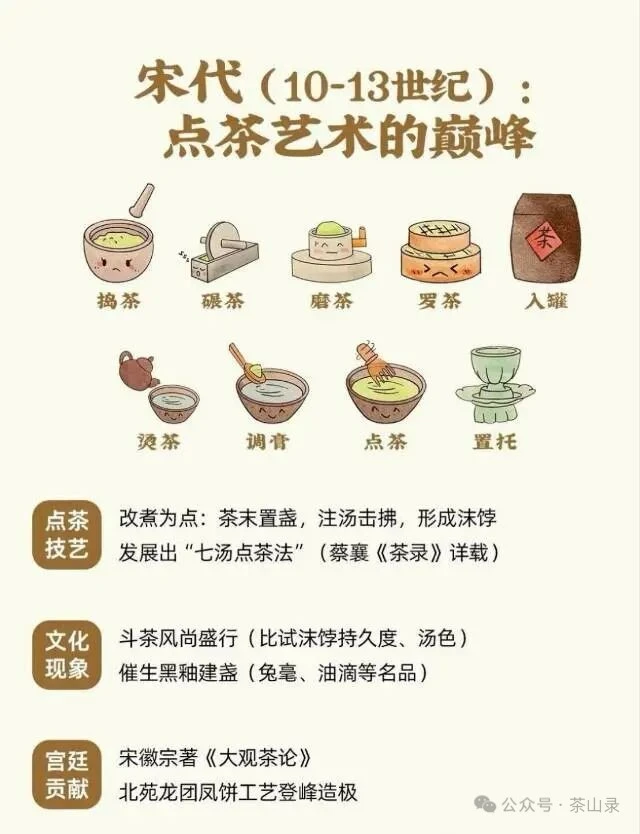
• Song Dynasty (Seemingly Drinking, Actually Eating): The refined and elegant practice of whisked tea (dian cha). Tea powder was blended into a paste first, then hot water was poured in and whisked vigorously to create dense, creamy foam, similar to modern matcha. Though the practice was still called "eating tea", the powdered tea fully dissolved into the liquid, so it remained within the category of consuming tea substance.
• The Ming Dynasty (the genuine start of "drinking tea"): a historic turning point. Emperor Zhu Yuanzhang abolished compressed tea balls and promoted loose-leaf tea, which brought the rise of the leaf-brewing method. Whole tea leaves are steeped in boiling water; people only drink the liquor instead of consuming the leaves, separating the tea liquid from the used tea residues. From then on, what we truly drink is the extracted tea infusion, and our tongues no longer come into contact with the tea leaves themselves.

· Modern Era (Different choices for different tastes): Drinking tea and appreciating its delicate fragrance and lingering charm has become the mainstream. However, the tradition of "eating tea" has never faded away. Matcha desserts inherit the customs handed down from the Song Dynasty. Lei tea retains the ancient way of tea making from the Qin and Han dynasties. The tapioca pearls and coconut jelly in milk tea mark a return to the ancient instinct of chewing while consuming tea.

From eating tea to drinking tea, we are not merely straining out the tea grounds. It is an elevation from taking tea as something to fill the stomach to appreciating it as a spiritual aesthetic pursuit. The moment people in the Ming Dynasty cast aside tea powder, tea stepped out of the daily trivialities of fuel, rice, oil and salt, and was elevated into the realm of qin, qi, shu and hua - the refined arts of life. Nowadays, do you prefer sipping the crisp and refreshing tea liquor, or long for the rich and mellow taste of eating matcha? 😊