We are facing a more severe challenge: everything must start from scratch.

When we export tea, we need to follow the standards of countries such as the European Union, the United Kingdom, Japan, and the United States. In 2012, Lipton was found to contain harmful substances by Greenpeace, but instead used Chinese standards. Surprisingly, according to the standards of the Chinese Ministry of Health, the harmful substances in Lipton did not exceed the standard. This scene is in sharp contrast to the strict testing system for Japanese green tea. Our tea is difficult to establish a foothold in the Japanese market, and although the use of Japanese pesticides can pass customs smoothly, it has encountered new problems in the European Union.

Since the implementation of the "Positive List System" in Japan in 2006, China's tea industry has become increasingly passive in the international market. In 2008, the European Union released new standards for pesticide residues in food, covering a wide range of areas and adjusting some standards based on the use of pesticides in China. These green barriers have made many tea companies fearful and turn to the domestic market.
In this context, the concept of organic tea emerged and became a focus of attention in the tea industry. The production process of organic tea strictly follows the organic agriculture production system to ensure the quality of tea. However, according to the statistical data of China Customs in 2011, the total export value of tea in China was 965 million US dollars, with an average unit price of 2.99 US dollars. Although the export quantity and average unit price have both increased, compared to 2010, among the top five countries in terms of import volume, except for Morocco, all other countries have shown a downward trend.

What is the current situation of the international tea market?
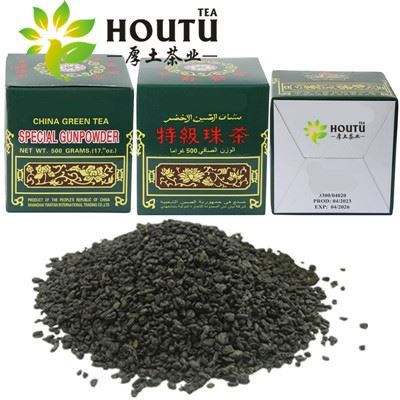
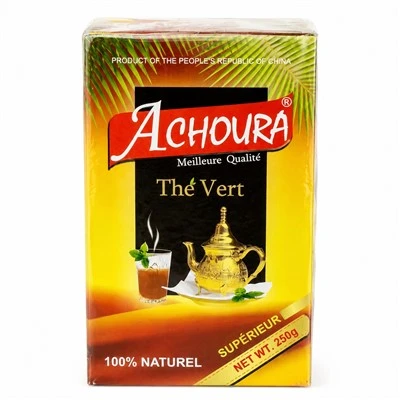
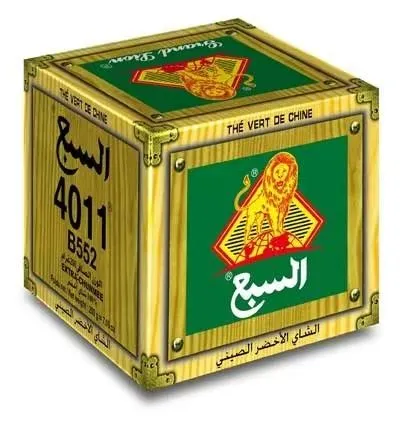
During this period, the market share of Chinese tea in Africa was relatively high, especially in Morocco, where the market share of Chinese tea reached 97%. However, this report card is not ideal, as China's tea industry still relies on low prices to gain a foothold in the international market. The proportion of green tea in the total export volume is not significant, with only a slight market share in other tea categories.
In terms of tea exports in the international market, the top ten tea exporting countries in the world are Kenya, Sri Lanka, China, India, Germany, the United Kingdom, Japan, Poland, the United States, and the United Arab Emirates. Among them, Kenya, Sri Lanka, China, and the United Arab Emirates rank in the top three, and their export volume exceeds more than half of the world's tea exports. Sri Lanka is located in the South Asian region of Asia and is an island country situated in the Indian Ocean. It is known as the "Pearl of the Indian Ocean" and is a traditional agricultural country. Kena, an Englishman, introduced tea trees to Kenya in 1903. Today, Kenya has become the largest tea producer in Africa in just over a century. All black tea produced here is broken black tea, but it has the same strong and fresh smell and bright red soup.

Despite the huge tea consumption in China and India, the proportion of imported tea in their total consumption is negligible, accounting for less than 5%. The factors of the consuming country itself are also a key factor affecting the performance of tea trade.
Taking the European Union as an example, important markets for black tea consumption in the world include the United Kingdom, Germany, and France, all of which have significant tea consumption. However, the EU has set strict standards for tea imports, especially for pesticide residues, which limits the export of Chinese tea.
The core of international trade lies in the exchange of goods and services. Compared to tea producing countries, consuming countries that do not produce tea or produce small amounts of tea, such as Russia, Pakistan, the United States, and Egypt, are the main driving force behind the growth of tea trade.
The export of tea is significantly affected by the production status of tea. Currently, global tea production exhibits a distribution pattern of "red in the south and green in the north", with black tea being the predominant color in low latitude regions such as India, Kenya, Sri Lanka, and others; Green tea is mainly consumed in high latitude regions, such as China, Japan, and other countries. To expand the international market, countries are striving to optimize the structure of tea exports. For example, India has been trying to cultivate green tea since the 1970s in order to seize the green tea market in China, but due to the constraints of natural environment and tea varieties, this attempt was not successful. Similarly, China is also increasing its research and export efforts in black tea. The main types of black tea in China are small variety black tea and Kung Fu black tea, which differ significantly from the popular broken red tea in the international market.
Although China has attempted to expand the production of broken red tea, the production cost of broken red tea is much higher than the global average, and the international market price is lower than the global average, resulting in a lack of competitiveness. Therefore, the production and export of black tea have shown a decreasing trend year by year. In 2018, black tea became the only tea category with a declining export share.

The main export countries/regions of Chinese tea in the year of 2025
Tea, as a globally popular beverage, occupies an important position in import and export trade and has become one of the key commodities. Usually, tea producing countries are also exporting countries. However, there is not an absolute proportional relationship between tea production and export, as the level of tea export is also influenced by domestic demand. China and India, the world's major tea producing countries, are typical examples in this regard. The two major domestic demand markets are huge and consume the vast majority of tea, so the total amount of tea available for export is relatively limited.
Since 2008, the global tea export market has maintained stable development, with an export volume of approximately 1.7 million tons. However, by 2017, the global tea export volume had declined by 1.1%, indicating a certain degree of overcapacity in the international tea market.
East Asia, South Asia, and Africa are the three main markets for tea exports. It is worth noting that in recent years, the Vietnamese tea market has developed rapidly, and the global tea export ranking has been rising year by year, ranking among the top five tea exporting countries in the world.
Compared to tea exports, the tea import market is more diversified, which is closely related to the large planting scale and high output of exporting countries. Kenya, China, India, and Sri Lanka are the four major tea exporting countries in the world, and their export markets exhibit obvious globalization characteristics. Taking China as an example, there were over 120 tea exporting countries and regions in 2017.

Due to factors such as geography and tea, there are certain differences in the distribution of major exporting countries in the global market. The main countries for Chinese tea exports include Russia, the United States, Morocco, Pakistan, etc; India and Sri Lanka are renowned for their black tea, with the market mainly concentrated in Europe; A large part of the Kenyan tea market is located in the African region.
The export issues of Chinese tea mainly manifest in the following aspects:
Both domestically and internationally, Chinese tea brands are difficult to compare with foreign competitors. The challenges faced by tea production are similar to many other industries in China: product quality, excessive domestic competition, low international market prices and meager profits, as well as weak brand strength. The fundamental reason for these problems lies in excessive market segmentation.

The problem originated from the tea garden. There are tea planting areas in central, southern, and western China, with about 8 million tea farmers engaged in tea cultivation, but most tea gardens are family style small tea gardens. The plan to connect small tea gardens into large tea gardens is limited by land regulations, as farmers only have the right to cultivate and cannot sell their land. This has led to a much lower level of industrialization in tea production in China compared to countries such as Kenya and India. Taking Zhejiang Province as an example, despite being the wealthiest province in China, there are still over one million small-scale tea gardens, each occupying less than 0.2 hectares. Monitoring the quality of millions of tea gardens scattered throughout the country is almost an impossible task, so Chinese tea exporters have repeatedly encountered problems with tea quality not meeting international safety standards.
The selling price of Chinese tea in the international market is only $2 per kilogram, which is much lower than India's $2.7 and Sri Lanka's $3.4. However, if the quality of tea in our country cannot be generally improved, the price of exported tea in the international market may continue to be low, making it difficult to stand out. In China, the tea market is filled with thousands of brands, and fierce competition leads to highly dispersed market share, which in turn makes corporate profits extremely weak. In addition, although China has numerous unique tea leaves, they have not yet formed a high level of recognition in the international market, which limits the international influence of Chinese tea brands. In order to achieve sustainable development of the tea industry, it is still necessary to vigorously promote the industrialization of tea production and use more efficient marketing strategies to enhance the competitiveness of China's tea in the international market.